Human CJC-1295 half-life data
Peptide clearance, growth hormone and IGF-1 each have a duration. Treating them as one clock creates avoidable confusion.
The DAC half-life estimate
For CJC-1295 DAC, the estimated half-life in healthy adults was 5.8-8.1 days. Half-life describes the time taken for the amount of compound in circulation to fall by half under the measured conditions. It leaves a continuing tail of exposure.
The modification explains the scale. The albumin-conjugating design attaches the peptide to a long-lived carrier protein. No-DAC Modified GRF (1-29) lacks that handle and is short-acting (minutes to hours). The comparison of the two forms identifies which name goes with which result.
Human hormone durations
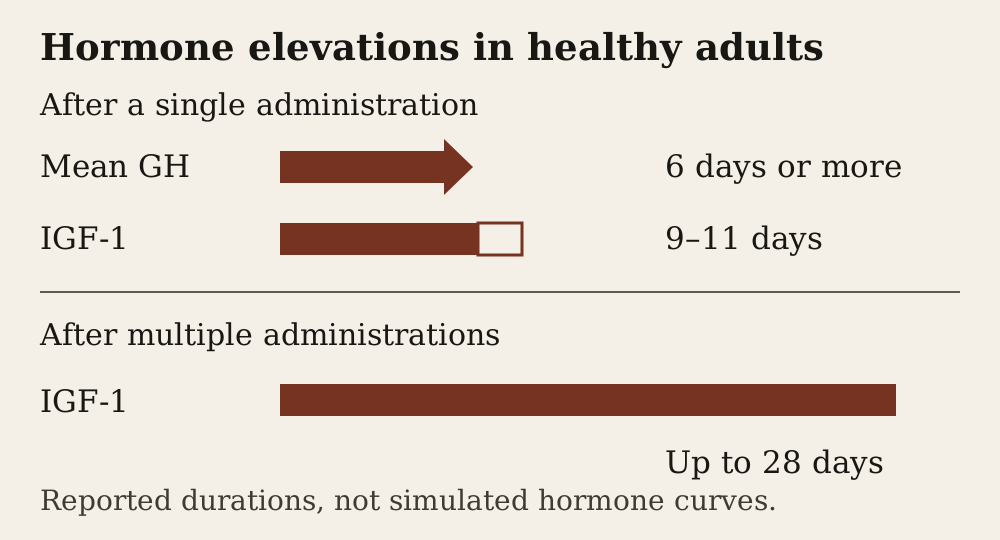
After single administrations in the human pharmacokinetic study, mean growth hormone rose 2- to 10-fold for 6 days or more, while IGF-1 rose 1.5- to 3-fold for 9-11 days. After multiple administrations, IGF-1 remained above baseline up to 28 days.
I separate the single and repeat findings even when they are printed on the same line. The repeat-administration result has different experimental conditions from the single-administration result. The compound's half-life and the downstream hormone's time above baseline also measure different things.
Duration and sporting detection
A multi-day half-life is tempting material for a prediction about a sporting test. Converting that half-life estimate into a sporting detection window exceeds the available measurements. The analytical review concerns methods for detecting GHRH analogs; the human pharmacokinetic paper concerns exposure and hormone responses. Establishing an assay's detection window calls for its own measurements.
The sporting rule already applies at all times under WADA Section S2. Nothing about the half-life estimate creates an authorised interval for use. The sport questions cover the prohibition; this page supplies no timing advice for evading testing.
Prolonged activity and safety
Long exposure also gives the safety discussion its biological context. Population data associate higher IGF-1 with some cancer risks, while growth hormone promotes sodium and water retention. Those findings justify questions about prolonged stimulation; they cannot calculate an individual's CJC-1295 risk.
The evidence I want next would follow meaningful health outcomes and adverse effects over longer periods. CJC-1295 has no established long-term safety record in healthy adults and remains unapproved for human use. The effects page distinguishes observed community complaints from those mechanistic concerns.